Pole Barn Insulation in Pleasant Grove that stops heat loss cold
Spray foam and fiberglass built for Utah County barns and shops
Pole Barn Insulation in Pleasant Grove is the difference between a barn you can work in all winter and one that bleeds heat through every metal seam. We seal and insulate metal buildings, workshops, and ag structures across Utah County with spray foam and fiberglass systems sized to your framing. If your shop hits 40 degrees while the heater runs nonstop, we fix that.
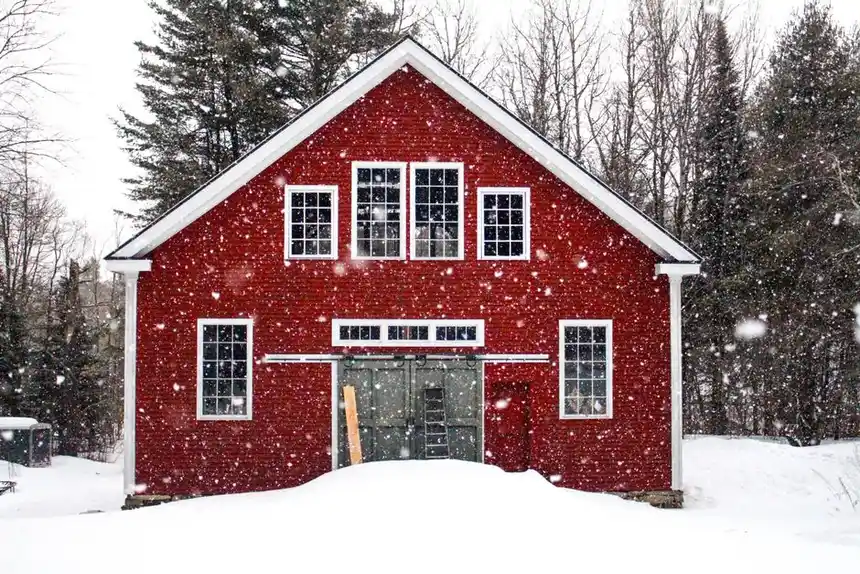
Pole Barn Insulation in Pleasant Grove, done right
Pole Barn Insulation in Pleasant Grove is the process of sealing a metal or post-frame building's envelope, then installing an insulation material that holds a stable interior temperature year-round. On a typical 40x60 shop, that means closing air leaks at the eaves, girts, and door frames, then building an R-value wall system with spray foam, fiberglass batts, or foam board. Without it, a metal shell acts like a radiator: hot in July, freezing in January, and loud in a hailstorm.
Pleasant Grove sits at the mouth of Grove Creek Canyon, where winter inversions hold cold air against the bench and summer afternoons push past 95 degrees. Barns here face a 100-degree annual swing, so the insulation has to handle both. That is why so many owners search for pole barn insulation in Pleasant Grove Utah once their first February heating bill lands. We size the R-value to the building's use, not to a generic chart.
Why Pleasant Grove owners insulate pole barns
Insulation changes how a barn behaves in every season. These are the four outcomes owners in Pleasant Grove tell us matter most after we finish the job.
Cuts heating and cooling costs
An uninsulated 40x60 metal barn in Pleasant Grove can burn 40 to 60 percent more propane or electricity than the same building with a proper R-19 wall and R-30 ceiling system. We seal air leaks first, then insulate, so your heater cycles less and your summer cooler actually keeps up.
Stops condensation and rust
Metal roofs sweat when warm interior air meets a cold panel. That moisture drips onto tools, hay, and equipment, and it rusts purlins from the inside. A vapor barrier plus spray foam keeps the dew point on the right side of the assembly, which is the single biggest reason barns near Battle Creek last longer.
Keeps pests and rodents out
Mice and wasps move into wall cavities through gaps as small as a quarter inch. We foam those gaps closed and use mineral wool or foam board where rodents chew. Owners who call us for pole barn insulation near me Pleasant Grove often mention pest infestation as the trigger, not the energy bill.
Makes the space usable year-round
A finished, insulated barn holds 65 to 70 degrees with a modest heater even when it is 15 degrees outside. That turns a seasonal storage shed into a workshop, a gym, a kennel, or a year-round shop. Most installs take one to two days, so the downtime is short.
How our pole barn insulation process works
Every barn is different, but the sequence is the same. Here is what you experience from the first call to the final walkthrough.
On-site assessment
We walk the building with you, measure wall and ceiling square footage, and check framing spacing, girt depth, and door openings. A thermal imaging camera and moisture meter show us where air is leaking and where condensation has already started. You get a written scope and a fixed price before we schedule.
Prep and air sealing
We mask doors and windows, move anything fragile, and seal the envelope. That means foaming the top plate, eaves, corners, and around every penetration, then taping seams where panels meet. Air sealing alone can cut heat loss by 20 to 30 percent before a single batt goes in.
Insulation install
Depending on the building, we install spray foam, fiberglass batts, mineral wool, or foam board. Walls get R-13 to R-21, ceilings R-30 to R-38. A spray foam gun and insulation blower let us fill irregular cavities that batts cannot reach. Most 40x60 barns take one to two days.
Vapor and thermal barrier
We install a vapor barrier on the warm side of the assembly and, where it makes sense, a radiant barrier under the roof line. Insulation tape seals the seams. This is the step that prevents moisture buildup and keeps the R-value from degrading over time.
Final inspection and walkthrough
We re-scan with the thermal camera, check for gaps, and confirm the R-value meets the spec we quoted. You get a walkthrough, care instructions, and our contact number. If anything looks off in the first year, we come back and fix it.
Why Pleasant Grove picks us for Pole Barn Insulation
We are not the only insulation company in Utah County, but we are one of the few that treats a pole barn like a building envelope instead of a box to fill with batts. Here is what that means for you.
Air sealing comes first
We never quote insulation without sealing air leaks first. On a typical Pleasant Grove barn, that step alone cuts heat loss by 20 to 30 percent. Skipping it is the most common mistake we see on competitor jobs, and it is why their R-value numbers never perform.
Materials matched to the building
Closed-cell spray foam for tight, high-moisture spaces. Fiberglass batts for straight, open walls. Mineral wool where rodents are a problem. Foam board for exterior sheathing. We stock Owens Corning, Johns Manville, CertainTeed, Rockwool, and Knauf so we are not forcing one product onto every barn.
Local code and climate knowledge
Utah County barns fall under IBC and local ag exemptions, and the rules change depending on whether the building is occupied. We know the difference and pull the right permits. We also size R-value for the 100-degree swing between a Pleasant Grove January and a Pleasant Grove July.
Fast scheduling, clear pricing
Most pole barn insulation installation Pleasant Grove jobs are scheduled within a week and finished in one to two days. You get a fixed price before we start, and we do not add line items mid-job. Call (855) 927-7517 and we will tell you what your building needs.
What our Pole Barn Insulation service includes
Every job starts with an assessment and a fixed quote. From there, the scope depends on your building, but most Pleasant Grove pole barn projects include the items below. We tell you upfront what is standard and what would be an add-on, so there are no surprises.
What's Included
Full envelope air sealing
We foam the top plate, eaves, corners, door frames, and every wire or pipe penetration. Air sealing is the step that makes the insulation perform, and it is included on every job we quote.
Wall insulation to spec
R-13 to R-21 depending on framing depth and how you use the building. We install fiberglass batts, mineral wool, spray foam, or foam board, and we vapor-barrier the assembly so the R-value holds.
Ceiling and roof insulation
R-30 to R-38 across the ceiling plane, plus a radiant barrier or foam board under the roof line where summer heat gain is the main issue. We seal the hatch and any light or vent penetrations.
Vapor and thermal barrier
A proper vapor barrier on the warm side of the assembly prevents moisture buildup and mold growth. We tape the seams and detail the transitions so the barrier is continuous, not just stapled up.
Thermal imaging verification
We re-scan the finished assembly with a thermal imaging camera to confirm there are no gaps or thermal bridging left. You see the results before we pack up, and we fix anything that shows up.
Walkthrough and care guide
We walk the building with you, explain what was installed, and leave a short care guide covering what to watch for and how to keep the R-value performing over the years.
Problems Pole Barn Insulation in Pleasant Grove solves
Most barn owners call us after a specific problem shows up, not because they want insulation for its own sake. These are the four issues we see most often in Pleasant Grove.
Heating bills that climb every winter
An uninsulated barn can burn 40 to 60 percent more propane than the same building with R-19 walls and R-30 ceilings, and the heater still never catches up on a 15-degree night.
We air seal first, then insulate to a spec sized for your building. Most owners see the difference on the first full bill after install, and the heater stops running nonstop.
Condensation dripping from the roof
Warm interior air hits a cold metal panel and sweats. That moisture drips onto tools, hay, and equipment, and it rusts purlins from the inside out. Left alone, it leads to mold growth.
We install closed-cell spray foam or a vapor barrier on the warm side of the assembly, which keeps the dew point where it belongs. The dripping stops and the rust stops spreading.
Mice and wasps in the wall cavities
Rodents and insects move through gaps as small as a quarter inch. Once inside, they nest in fiberglass batts, chew wiring, and leave droppings that make the space unpleasant to work in.
We foam the gaps closed and use mineral wool or foam board in areas where rodents chew. That removes the entry points and the nesting material in one pass.
A barn that is unusable half the year
If the space swings from 95 degrees in July to 20 degrees in January, you cannot use it for a workshop, gym, kennel, or year-round shop. It becomes seasonal storage at best.
A properly insulated and sealed barn holds 65 to 70 degrees with a modest heater. We size the system to how you want to use the building, not to a generic chart.
When Pleasant Grove owners insulate a pole barn
A hobby shop owner in Pleasant Grove Heights wants to work in the barn all winter without a second mortgage in propane.
We air seal the envelope, install R-19 spray foam or batts in the walls, and blow R-38 in the ceiling. A thermal camera confirms there are no gaps before we leave.
The shop holds 68 degrees with a small heater, and the first winter bill drops by 30 to 40 percent compared to the year before.
A horse owner near Battle Creek is dealing with condensation dripping onto hay and tack.
We install closed-cell spray foam on the roof line and walls, plus a continuous vapor barrier. We also seal the door frames and any penetrations where moist air was entering.
The dripping stops, the hay stays dry, and the rust on the purlins stops spreading. The barn smells better and the tack lasts longer.
A commercial ag operation at the Pleasant Grove Industrial Park needs a metal building insulated to code before an inspection.
We build the assembly to IBC and ENERGY STAR standards, document the R-values, and coordinate the inspection. Foam board breaks thermal bridging through the girts.
The building passes inspection, the R-value is documented, and the operation runs at a stable temperature year-round.
A new barn owner in Grove Creek is converting a storage shed into a year-round kennel.
We insulate the walls and ceiling, seal the envelope, and add soundproofing with dense mineral wool so barking does not carry to the neighbors.
The kennel holds temperature, the noise stays inside, and the space is usable 12 months a year instead of six.
Tools and methods we use on pole barns
Tools & Equipment
Spray foam gun
Applies closed-cell and open-cell foam into wall cavities, rim joists, and irregular gaps that batts cannot fill. It is the tool that makes air sealing and insulation a single pass.
Insulation blower
Blows fiberglass or cellulose into ceiling planes and enclosed bays. It fills odd shapes evenly, which is why it works well on barn ceilings with purlins and cross-bracing.
Thermal imaging camera
Shows us where air is leaking and where insulation is missing before we start, and verifies the finished assembly after. It is how we prove the job is done, not just claim it.
Moisture meter
Reads moisture content in framing and sheathing so we know whether a vapor barrier or spray foam is the right call. On a barn with existing condensation, this drives the material choice.
Foam board cutter
Cuts rigid foam board to fit between girts and around door frames. Clean cuts mean tight seams, which is where thermal bridging usually starts.
Respirator and PPE
Protects our crew during spray foam and blown-in work. We also mask your equipment and ventilate the building so the space is safe to re-enter when we are done.
Methods
Air sealing first
We seal the top plate, eaves, corners, and every penetration before installing insulation. On a typical Pleasant Grove barn, this step alone cuts heat loss by 20 to 30 percent and makes the R-value perform as rated.
R-value sizing to use
Heated workshops get R-19 walls and R-30 ceilings. Unheated storage can go lower. We size to how you use the building, not to a generic chart, which keeps the cost honest and the performance real.
Vapor barrier on the warm side
We install a continuous vapor barrier on the warm side of the assembly and tape the seams. This prevents moisture buildup and mold growth, which is the most common failure we see on barns insulated by other crews.
Thermal bridging control
Metal girts and purlins conduct heat straight through a wall. We use foam board or spray foam to break those bridges, so the assembly performs closer to its rated R-value instead of losing 15 to 20 percent.
IBC and ENERGY STAR compliance
We build to IBC and ENERGY STAR standards and document the R-values. For commercial ag buildings in Pleasant Grove, that documentation is what gets you through inspection without a second visit.
How Pole Barn Insulation runs in Pleasant Grove
Pleasant Grove barns sit in a specific climate: cold inversion winters that hold 15-degree air against the bench for weeks, and dry summers that push past 95 degrees. That 100-degree swing is why we size R-value for both seasons, not just heating. Most of the buildings we work on are post-frame with metal skins, 16-inch or 24-inch girt spacing, and at least one large overhead door. The doors and the eaves are where most of the heat loss happens, so we detail those first. Utah County also has ag exemptions that change what insulation is required depending on whether the building is occupied, and we know the difference. If you are searching for pole barn insulation Pleasant Grove 24/7 because a storm took off a panel, we can schedule fast and restore the R-value before the next cold front. Call (855) 927-7517 and we will tell you what your building needs.
Service Areas
Higher elevation means colder nights and more snow load. Barns here benefit from R-38 ceilings and a vapor barrier that handles freeze-thaw cycles.
Canyon mouth location funnels cold air down at night. We see more condensation issues here, so spray foam and a continuous vapor barrier are common recommendations.
Older post-frame barns with wider girt spacing. We use foam board or spray foam to fill the deeper cavities and break thermal bridging through the framing.
Commercial ag and metal buildings that need documented R-values for inspection. We build to IBC and ENERGY STAR and provide the paperwork.
Local Considerations
Winter inversions holding 15-degree air for weeks
Heaters run nonstop in uninsulated barns. Air sealing plus R-19 walls and R-30 ceilings is the difference between a usable shop and a seasonal shed.
Summer afternoons above 95 degrees
Metal roofs radiate heat into the building. A radiant barrier or foam board under the roof line drops interior temps 10 to 15 degrees.
Dry air and wide temperature swings
Framing moves with the swing, which opens seams over time. We tape and seal with materials that flex, so the envelope stays tight after a few seasons.
Ag exemptions that vary by building use
Occupied buildings face different requirements than storage. We know the Utah County rules and pull the right permits for your situation.
40x60 shop goes from unusable to year-round
A 40x60 metal shop in Pleasant Grove Heights had bare walls and a bare ceiling. The owner ran a 60,000 BTU heater all winter and the space still hovered around 45 degrees. Propane bills ran $400 to $500 a month from November through March.
We air sealed the envelope, installed R-19 spray foam in the walls, and blew R-38 in the ceiling. The shop now holds 68 degrees with the same heater cycling about half as often. The first winter bill dropped to roughly $260 a month.
Maintenance & Follow-up
Check the vapor barrier seams once a year and re-tape any that lift. Keep the overhead door gasket clean so the seal stays tight. We come back for a free thermal scan at the one-year mark.
A hay barn near Battle Creek had condensation dripping off the purlins onto stored hay. Rust was spreading along the roof structure, and the bottom bales were molding within a month of storage.
We installed closed-cell spray foam on the roof line and walls, plus a continuous vapor barrier. The dripping stopped completely. Two seasons later, the purlins show no new rust and the hay stores dry through the winter.
Maintenance & Follow-up
Keep the barn vents clear so moisture can escape in summer. Inspect the vapor barrier after any roof work. We recommend a moisture meter check each fall before hay storage.
A storage shed in Grove Creek was being converted to a year-round kennel. The bare metal walls amplified barking, and the space swung from 95 degrees in July to below freezing in January. Neighbors had already complained about the noise.
We insulated the walls and ceiling, sealed the envelope, and added dense mineral wool for soundproofing. The kennel now holds 68 to 72 degrees year-round, and the noise at the property line dropped enough that the complaints stopped.
Maintenance & Follow-up
Vacuum or wipe down the mineral wool surface every few months to keep it clean. Check the door seals each season. We can re-scan the envelope if you ever notice a temperature swing.
How much does pole barn insulation cost in Pleasant Grove UT?
Most pole barn insulation jobs in Pleasant Grove run $2,200 to $8,500 in 2026, depending on square footage and material. A 40x60 barn with fiberglass batts typically lands near the low end; closed-cell spray foam on the same building pushes toward the high end. Air sealing, vapor barrier, and ceiling work are included in our quotes.
What is the best pole barn insulation in Pleasant Grove Utah?
Closed-cell spray foam is the best performer for most Pleasant Grove barns because it seals air, resists moisture, and hits R-6 to R-7 per inch. Fiberglass batts are the best value for straight walls with standard 16-inch or 24-inch framing. We recommend based on how you use the building, not on a single product.
Who installs pole barn insulation near me in Pleasant Grove?
Skyseal Corner installs pole barn insulation across Pleasant Grove and Utah County, including Grove Creek, Battle Creek, Manila, and the Pleasant Grove Bench. We are licensed, insured, and have been working on post-frame buildings since 2022. Call (855) 927-7517 and we will schedule an on-site assessment.
How to choose pole barn insulation in Pleasant Grove?
Start with how you use the building. Heated workshops need R-19 walls and R-30 ceilings; unheated storage can get by with less. Then check moisture: if condensation is already dripping from the roof, you need spray foam or a vapor barrier, not bare batts. We walk you through both on the assessment.
Licensed, certified, and reviewed
Certifications
Reviews
Skyseal insulated our 40x60 shop in Pleasant Grove and the difference was immediate. They sealed the eaves, sprayed the walls, and blew the ceiling. The thermal scan at the end showed no gaps. Fair price, clean work, finished in two days.
We had condensation dripping off our barn roof and rust starting on the purlins. They installed closed-cell foam and a vapor barrier, and the dripping stopped. Also sealed the mouse gaps. Professional crew, showed up when they said they would.
Called about insulating a hay barn near Battle Creek before a cold snap. They scheduled within four days and finished in a day and a half. The barn holds heat now and our equipment is not freezing. They know metal buildings.
Converted a shed into a year-round kennel in Grove Creek. Skyseal insulated the walls and ceiling and added soundproofing. The noise complaints stopped and the space holds temperature. Honest pricing and no surprises on the invoice.
Related Services
Spray Foam Insulation
Spray foam is the go-to for Pleasant Grove pole barns with irregular framing or high moisture. It seals and insulates in one pass, hitting R-6 to R-7 per inch. We use it on walls, ceilings, and rim joists where batts cannot reach.
Spray Foam InsulationAttic Insulation
Many Pleasant Grove pole barns have a finished attic or loft used for storage. We insulate those spaces to R-38 and air seal the hatch, which stops the stack effect that pulls cold air up through the shop below.
Attic InsulationGarage Door Insulation
An uninsulated overhead door can account for 15 to 20 percent of a barn's heat loss. We add foam board or a door kit to match the wall R-value, so the largest opening in the building stops being the weakest point.
Garage Door InsulationFiberglass Insulation
Fiberglass batts are the most cost-effective option for straight, dry pole barn walls in Pleasant Grove. We stock Owens Corning and Johns Manville batts in R-13 through R-21 and install them with a proper vapor barrier.
Fiberglass InsulationFoam Board Insulation
Rigid foam board goes on exterior sheathing or under metal panels where you want continuous insulation without a thick cavity. It breaks thermal bridging through the girts, which is a common weak spot in Pleasant Grove metal buildings.
Foam Board InsulationInsulation Installers Near Me
If you are searching for insulation installers near me in Pleasant Grove, we cover the whole city and Utah County. One crew handles assessment, air sealing, insulation, and vapor barrier, so you are not coordinating three trades.
Insulation Installers Near Me24/7 Insulation Installation
When a barn loses insulation after a storm or a roof repair, we can schedule around your timeline, including early mornings and weekends. Call (855) 927-7517 and we will find a slot that keeps your operation running.
24/7 Insulation InstallationEmergency Insulation Repair
Rodents, water damage, and blown-off panels can leave a barn exposed overnight. We respond fast across Pleasant Grove, patch the damaged section, and restore the R-value so you are not heating the outdoors.
Emergency Insulation RepairBasement Insulation
If your pole barn has a below-grade room or root cellar, we insulate the walls with foam board and seal the rim. That stops the cold floor and damp walls that make lower levels unusable in Pleasant Grove winters.
Basement InsulationHome Insulation
Many Pleasant Grove property owners insulate the barn and the house in the same visit. We apply the same air-sealing-first approach to both, which usually drops the combined energy bill by 15 to 25 percent.
Home InsulationRockwool Insulation
Mineral wool resists fire, moisture, and rodents, which makes it a strong fit for Pleasant Grove barns storing hay or equipment. It holds R-value even when damp, unlike fiberglass batts that sag and lose performance.
Rockwool InsulationCellulose Insulation
Blown cellulose fills odd cavities and attic spaces in pole barns at a low cost per R-value. We use it on flat ceilings and enclosed bays where spray foam would be overkill for the budget.
Cellulose InsulationWindow Insulation
Barn windows leak air around the frame and through single panes. We seal the rough opening and add a window kit or foam board insert, which cuts drafts without blocking the daylight you want.
Window InsulationCeiling Insulation
Heat rises, and an uninsulated barn ceiling is where most of it escapes. We blow or batt R-30 to R-38 across the ceiling plane, then seal the hatch and any penetrations for lights or vents.
Ceiling InsulationMetal Building Insulation
Pole barns are metal buildings, and they need insulation that accounts for thermal bridging through the girts and purlins. We use foam board or spray foam to break those bridges and keep the R-value honest.
Metal Building InsulationRoof Insulation
A hot metal roof radiates heat into the barn all summer. We install radiant barrier or foam board under the roof line, which drops interior temps 10 to 15 degrees on a Pleasant Grove July afternoon.
Roof InsulationSoundproof Insulation
If your barn houses equipment, animals, or a workshop, sound matters. Dense mineral wool and spray foam cut noise transfer, which keeps the neighbors in Pleasant Grove happy and the space more comfortable to work in.
Soundproof InsulationDouble Bubble Insulation
Double bubble foil is a reflective option for barn roofs and walls where you want a radiant barrier and a vapor retarder in one product. It works well over purlins in Pleasant Grove metal buildings.
Double Bubble InsulationFoil Insulation
Foil insulation reflects radiant heat and pairs well with a foam board or batt system. We use it on roof decks and south-facing walls where summer heat gain is the main problem.
Foil InsulationInsulation Near Me
Searching insulation near me in Pleasant Grove brings up a lot of options. We are local, we work on post-frame buildings every week, and we quote a fixed price before we start. Call (855) 927-7517.
Insulation Near MeBlown In Insulation
Blown-in fiberglass or cellulose is fast and fills irregular cavities in barn ceilings and walls. It is a good fit for Pleasant Grove pole barns with open framing and a tight budget.
Blown In InsulationSpray Foam Insulation Near Me
If you want spray foam insulation near me in Pleasant Grove, we install closed-cell and open-cell systems on walls, ceilings, and rim joists. It is the top performer for air sealing and moisture control.
Spray Foam Insulation Near MeCrawl Space Insulation
Some pole barns have a crawl space under an office or tack room. We insulate the walls and seal the rim to stop cold floors and pipe freezing during Pleasant Grove's January cold snaps.
Crawl Space InsulationWall Insulation
Wall insulation is the core of any pole barn job. We install batts, spray foam, or foam board between the girts, then seal and vapor-barrier the assembly so the R-value performs as rated.
Wall InsulationInsulation Removal
Old, wet, or pest-infested insulation has to come out before new material goes in. We remove and dispose of damaged batts or foam, then re-insulate the cavity properly.
Insulation RemovalFloor Insulation
A cold concrete floor pulls heat out of a barn all winter. We add foam board or a subfloor system on top of the slab or in a crawl space, which makes the space comfortable to stand and work in.
Floor InsulationGet your Pole Barn Insulation in Pleasant Grove quoted today
We have been insulating Utah County barns since 2022, and we quote a fixed price before we start. Call (855) 927-7517 or request an on-site assessment and we will tell you exactly what your building needs.