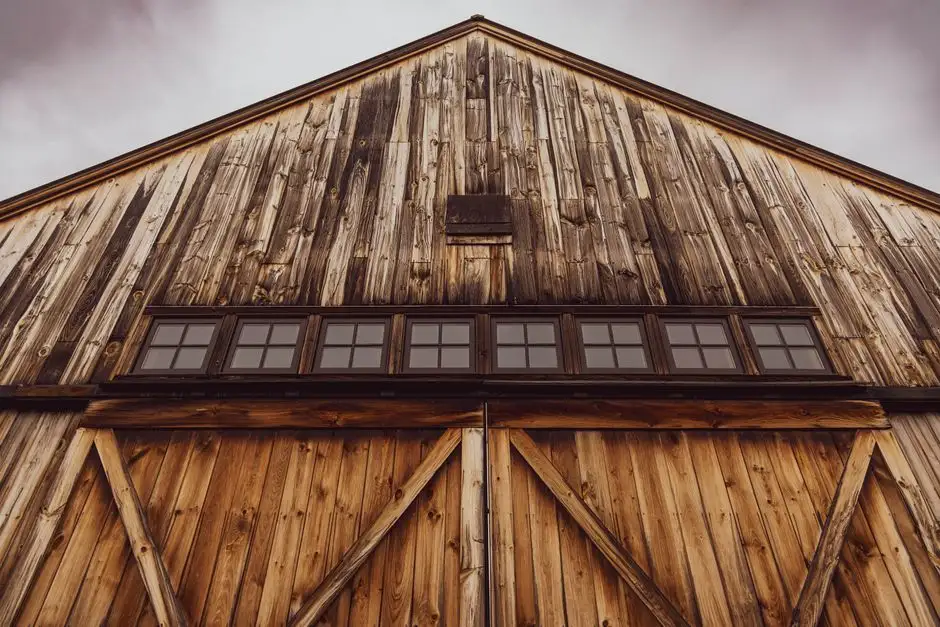
Insulating a pole barn in Pleasant Grove means sealing the building envelope before you add R-value - foam or caulk every gap in the metal skin and around the posts, then install a vapor barrier and insulation rated for our climate. If you skip the air sealing, even R-30 batts will underperform once the January wind hits the west wall.
We have insulated pole barns from the horse properties off North County Boulevard to the equipment sheds near the mouth of the canyon, and the failures almost always trace back to moisture and air leaks, not thickness. This guide walks through material choices, real 2026 pricing in Pleasant Grove, and the spots where DIY work usually goes wrong.
Why pole barns in Pleasant Grove need insulation
Pleasant Grove pole barns face a specific set of conditions: summer highs that push past 95°F, winter lows that drop into the teens, and wide daily temperature swings in spring and fall. Bare metal roofing and siding conduct that heat and cold straight into the interior, which is why an uninsulated barn can hit 110°F inside on an August afternoon and drop below freezing by 6 a.m. in January.
Condensation is the bigger long-term problem. When warm, moist air from inside a barn meets cold metal purlins or girts, water beads on the steel and drips onto whatever is underneath - hay, tools, a tractor seat, or the framing itself. Over a few seasons that moisture rusts fasteners, rots the bottom of wood posts, and grows mold on stored materials. Insulation with a proper vapor barrier stops the warm air from ever reaching the cold steel.
If you are also tightening up the house on the same property, the same principles apply. Our team handles Insulation for barns, shops, garages, and homes across the valley, and the sequence is always the same: seal, then insulate.
How do I insulate a pole barn in Pleasant Grove?
You insulate a pole barn in Pleasant Grove by working in this order: air seal, vapor barrier, then insulation - walls first, then ceiling, then any doors or windows. Doing it out of order wastes money because air movement through the assembly cancels out most of the R-value you just paid for.
- Air seal the shell. Foam or caulk every seam in the metal siding, around each post penetration, at the base angle, and where the roof panels meet the walls. This is the single highest-return step.
- Install a vapor barrier. In our climate, the barrier goes on the warm side of the assembly - the interior face. Use 6-mil poly or a foil-faced product with taped seams.
- Insulate the walls. Fill the cavity between the girts, or apply continuous rigid board on the interior face of the girts if you want to avoid thermal bridging through the steel.
- Insulate the ceiling or roof. This is where you lose the most heat. Blown-in or spray foam on the underside of the roof deck works well; batts between ceiling joists work if the attic is vented.
- Seal the doors and windows. A roll-up door with no insulation is a 100-square-foot hole in your envelope. Add a kit or replace the door panel.
For the wall cavities specifically, fiberglass insulation Pleasant Grove UT is the budget option and works fine when the cavity is fully filled and the vapor barrier is tight. For exposed interior walls where you want a finished look and better moisture resistance, rigid board is the better call.
What is the best pole barn insulation in Pleasant Grove UT?
The best pole barn insulation in Pleasant Grove UT is closed-cell spray polyurethane foam for the walls and roof deck, with fiberglass or cellulose as the lower-cost alternative for ceiling cavities that stay dry. There is no single winner - it depends on whether the barn is climate-controlled, how it is used, and your budget.
Spray foam
Closed-cell spray foam delivers roughly R-6.5 to R-7 per inch, seals air leaks as it expands, and adds structural rigidity to metal panels. A 2-inch application gives you about R-13 and a full air barrier in one pass. It is the right choice for a heated shop, a barn with animals that generate moisture, or any building where you want the interior to stay comfortable year-round. Our spray foam insulation Pleasant Grove UT crews typically finish a 30x40 barn in one day.
Fiberglass batts
Fiberglass is the cheapest material per square foot and the easiest to install yourself. The catch is that it does nothing to stop air movement, so it only performs when the shell is already sealed and the vapor barrier is continuous. In a pole barn with exposed girts, batts also sag over time unless they are supported with wire or netting.
Foam board
Rigid foam board goes up fast on the interior face of the girts and eliminates thermal bridging through the steel. Two inches of polyiso gives you about R-13 continuous. It is a strong choice for walls you want to keep clean and washable, like a wash bay or a workshop wall.
Blown-in cellulose and rockwool
For ceiling cavities, blown-in cellulose is dense, inexpensive, and handles our dry summer air well. Rockwool is the premium pick when fire resistance or sound control matters - it is non-combustible and deadens noise from equipment or animals better than fiberglass.
How much does pole barn insulation cost in Pleasant Grove?
Typical 2026 pricing in Pleasant Grove runs $1.50 to $3.50 per square foot for fiberglass batts installed, $3.50 to $7.00 per square foot for closed-cell spray foam, and $2.00 to $4.00 per square foot for rigid foam board. A 30x40 pole barn with 10-foot walls has roughly 1,400 square feet of wall area and 1,200 square feet of ceiling, so a full fiberglass job lands around $3,500 to $6,000 and a full closed-cell foam job lands around $8,000 to $14,000.
Material-only DIY costs are lower - fiberglass batts run $0.50 to $1.20 per square foot at the box stores, and a 2-inch foam board runs $1.20 to $2.00 per square foot. Spray foam kits are the wildcard: a two-component kit that covers 600 board feet at 1 inch costs $350 to $600, and most barns need far more than one kit.
Three variables move the number the most:
- Square footage and ceiling height. A 14-foot sidewall adds 40% more wall area than a 10-foot wall on the same footprint.
- Material choice. Closed-cell foam can be three to four times the cost of batts for the same cavity.
- Prep work. If the barn needs old insulation removed, rodent debris cleaned out, or wiring moved, that adds labor. Our insulation removal Pleasant Grove UT service handles the tear-out before new material goes in.
If you want a firm number instead of a range, we will measure the barn and quote it upfront - no surprises after the work starts.
Is DIY pole barn insulation worth it in Pleasant Grove?
DIY pole barn insulation is worth it in Pleasant Grove if you are installing fiberglass batts or foam board in an already-sealed, single-story barn with easy access and no moisture problems. It is not worth it if you need spray foam, if the barn has existing mold or rodent damage, or if the ceiling is more than 12 feet high.
Here is the honest math. A homeowner installing R-19 batts in a 30x40 barn saves roughly $1,500 to $2,500 in labor versus hiring it out. That is real money. But the same homeowner usually misses the air sealing step, leaves gaps around posts and purlins, and ends up with a barn that still sweats in February. We get called to redo DIY jobs more often than you would think.
Spray foam is a different story. The two-component kits are finicky about temperature - the tanks need to be between 75°F and 85°F to mix and cure properly, which is a problem in an unheated barn in October. Off-ratio foam will not cure, and you will be scraping sticky goo off your walls. For any barn over 1,000 square feet, professional spray foam is faster, safer, and usually cheaper once you account for wasted material.
One more thing: if the barn shares a wall with a living space or you are converting part of it into a shop, treat it like a house. Our wall insulation Pleasant Grove UT work covers both barns and finished interior spaces, and the detailing is different when people will be inside regularly.
Common mistakes we see on Pleasant Grove pole barns
The mistakes we see most often on Pleasant Grove pole barns all come back to moisture and air movement. Here are the ones that cost the most to fix.
- Insulating before air sealing. Batts stuffed into a leaky shell perform at half their rated R-value. Seal first, always.
- Putting the vapor barrier on the wrong side. In our climate the barrier goes on the interior. A barrier on the exterior traps moisture in the wall and rots the framing.
- Leaving the metal skin exposed on the interior. Bare steel siding sweats every cold morning. If you cannot insulate the whole wall, at least address the north and west faces.
- Ignoring the ceiling. Heat rises. A barn with insulated walls and a bare roof still loses most of its heat through the ceiling.
- Using the wrong foam. Open-cell foam is cheaper but absorbs water and is a poor vapor barrier. For a barn, closed-cell is the right product.
- Forgetting the doors. An uninsulated roll-up door is the biggest single leak in most barns. A kit costs $100 to $300 and takes an afternoon.
If your barn sits on the east bench where the wind comes through the canyon harder, those north and west walls need extra attention. We do a lot of work on Insulation in Pleasant Grove East for exactly this reason - the exposure is different up there.
When to call a professional
Call a professional when the barn needs spray foam, when there is existing moisture damage or mold, when the ceiling is high enough to require scaffolding, or when you want the job done in a single day instead of three weekends. Those are the jobs where DIY stops making sense.
Skyseal Corner handles pole barn insulation across Pleasant Grove and the surrounding valley. We seal, insulate, and verify the assembly before we leave, and we quote the job upfront so you know the number before we start. If you are weighing options, we will tell you honestly whether your barn is a good DIY candidate or not.
Frequently Asked Questions
How do I insulate a pole barn in Pleasant Grove?
Air seal the metal shell first, install a 6-mil vapor barrier on the interior face, then insulate walls and ceiling. Closed-cell spray foam gives the best performance; fiberglass batts are the budget option when the shell is already tight.
What is the best pole barn insulation in Pleasant Grove UT?
Closed-cell spray foam is the best overall choice for our climate - about R-7 per inch, plus it air seals as it cures. Fiberglass batts work well for ceiling cavities when the vapor barrier is continuous and the space stays dry.
How much does pole barn insulation cost in Pleasant Grove?
In 2026, installed costs run $1.50 to $3.50 per square foot for fiberglass and $3.50 to $7.00 for closed-cell foam. A typical 30x40 barn lands between $3,500 and $14,000 depending on material and prep work.
Is DIY pole barn insulation worth it in Pleasant Grove?
For fiberglass or foam board in an accessible, dry barn, yes - you save $1,500 to $2,500 in labor. For spray foam, high ceilings, or any barn with moisture damage, hiring a pro is faster and usually cheaper.
Do I need a vapor barrier in a Pleasant Grove pole barn?
Yes. Our winters drive a strong vapor gradient, and without an interior vapor barrier, warm moist air condenses on the cold steel and drips. Use 6-mil poly or a foil-faced product with taped seams.
Get help with Insulation in Pleasant Grove
If you want your pole barn sealed and insulated before the cold sets in, our team can measure it, quote it, and finish most barns in a day or two. Call Skyseal Corner at (855) 927-7517 and we will get you a straight answer on the best approach for your building.